
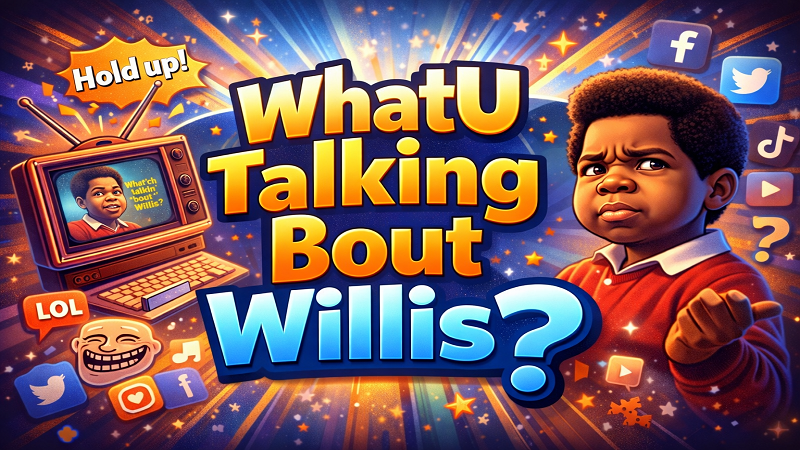
In the world of pop culture, certain phrases refuse to fade away. They travel across generations, adapt to new platforms, and suddenly resurface as trends. One such phrase making waves again in 2026 is WhatUTalkingBoutWillis.
But what does it actually mean? Where did it come from? And why is it trending again today?
In this complete guide, we break down the meaning, origin, cultural impact, and modern relevance of WhatUTalkingBoutWillis.
What Does WhatUTalkingBoutWillis Mean?
At its core, WhatUTalkingBoutWillis is a humorous expression of confusion, disbelief, or playful sarcasm. People use it when someone says something surprising, strange, or unbelievable.
In simple terms, it translates to:
“What are you talking about?”
However, the charm of the phrase lies in its exaggerated pronunciation and comedic tone. It carries a playful attitude rather than a serious confrontation.
In modern internet culture, users type or post “WhatUTalkingBoutWillis” when reacting to:
-
Unexpected statements
-
Funny misunderstandings
-
Bold claims
-
Viral social media posts
It adds personality to reactions.
The Origin of WhatUTalkingBoutWillis
The phrase originally comes from American television history. It became famous through the classic sitcom Diff’rent Strokes, which aired in the late 1970s and 1980s.
The character who popularized the line was Arnold Jackson, portrayed by Gary Coleman.
Whenever Arnold felt confused or skeptical, he would respond with:
What’chu talkin’ ‘bout, Willis?
The line quickly became one of the most iconic catchphrases in television history. Audiences loved its delivery, timing, and comedic impact.
Over time, the phrase escaped the show and entered mainstream culture.
How the Phrase Evolved Over Time
After the show ended, the phrase did not disappear. Instead, it evolved.
1990s – Pop Culture Reference
People referenced it in comedy shows, stand-up routines, and casual conversations.
Early 2000s – Internet Forums
Users began typing variations of the phrase in online chatrooms and forums.
2010s – Meme Culture
With the rise of social media platforms, the phrase became meme-friendly. Users added reaction images and GIFs.
2026 – Digital Rebirth
Now in 2026, WhatUTalkingBoutWillis is trending again due to nostalgia content, retro TV clips, and viral TikTok-style short videos.
The phrase feels both vintage and fresh at the same time.
Why Is WhatUTalkingBoutWillis Trending in 2026?
Several factors explain its renewed popularity:
Nostalgia Wave
Retro television content has made a major comeback. Streaming platforms and social clips have reintroduced classic moments to younger audiences.
Meme Resurgence
Internet users love reviving old catchphrases and giving them new life. WhatUTalkingBoutWillis fits perfectly into meme culture.
Short-Form Video Platforms
Creators use the phrase in reaction videos and comedic edits. Its tone makes it instantly recognizable.
Gaming & Online Communities
Gamers and streamers often use the phrase humorously when reacting to unexpected gameplay moments.
The mix of nostalgia and digital creativity fuels its trend cycle.
How People Use WhatUTalkingBoutWillis Today
In 2026, the phrase appears in multiple contexts:
-
Social media captions
-
Comment sections
-
Meme reactions
-
Gaming streams
-
Casual conversations
For example:
Someone posts a shocking opinion →
Reply: WhatUTalkingBoutWillis 😂
A friend exaggerates a story →
Response: WhatUTalkingBoutWillis?!
It communicates disbelief in a funny, non-aggressive way.
Cultural Impact of WhatUTalkingBoutWillis
Few television lines achieve multi-decade relevance. WhatUTalkingBoutWillis stands out because:
-
It became a symbol of classic sitcom humor
-
It crossed generational boundaries
-
It adapted to internet language
-
It stayed recognizable without losing charm
Many catchphrases fade. This one survived.
It represents how entertainment influences everyday speech.
Is WhatUTalkingBoutWillis Just a Meme?
Not exactly.
While it functions as a meme today, its roots are deeper. It reflects:
-
Television history
-
Character-driven humor
-
Linguistic style evolution
-
Internet remix culture
In a way, it shows how media phrases transform into digital expressions.
The Psychology Behind Catchphrases Like This
Why do phrases like WhatUTalkingBoutWillis stick?
Because they combine:
-
Rhythm
-
Emotion
-
Character identity
-
Humor
The exaggerated pronunciation makes it memorable. When people repeat it, they connect with shared cultural memory.
That shared memory creates virality.
Will the Trend Last?
Trends cycle quickly online. However, WhatUTalkingBoutWillis has already survived decades.
That longevity suggests it will continue resurfacing in new formats:
-
Remixed audio
-
Reaction stickers
-
AI voice recreations
-
Retro TV edits
As long as nostalgia culture thrives, the phrase will remain relevant.
Frequently Asked Questions
What does WhatUTalkingBoutWillis mean?
It means “What are you talking about?” expressed in a humorous or skeptical tone.
Where did WhatUTalkingBoutWillis originate?
It originated from the sitcom Diff’rent Strokes, spoken by the character Arnold Jackson.
Why is WhatUTalkingBoutWillis trending in 2026?
Nostalgia trends, meme culture, and short-form videos have revived its popularity.
Is WhatUTalkingBoutWillis still used today?
Yes, people use it online, especially in reaction posts and humorous conversations.
Conclusion
WhatUTalkingBoutWillis is more than a catchphrase. It is a piece of television history that successfully transitioned into digital culture. Its humor, simplicity, and nostalgic charm keep it alive across generations.
In 2026, as retro trends blend with modern meme culture, phrases like this prove that great pop culture moments never truly disappear. They just wait for the right moment to trend again.